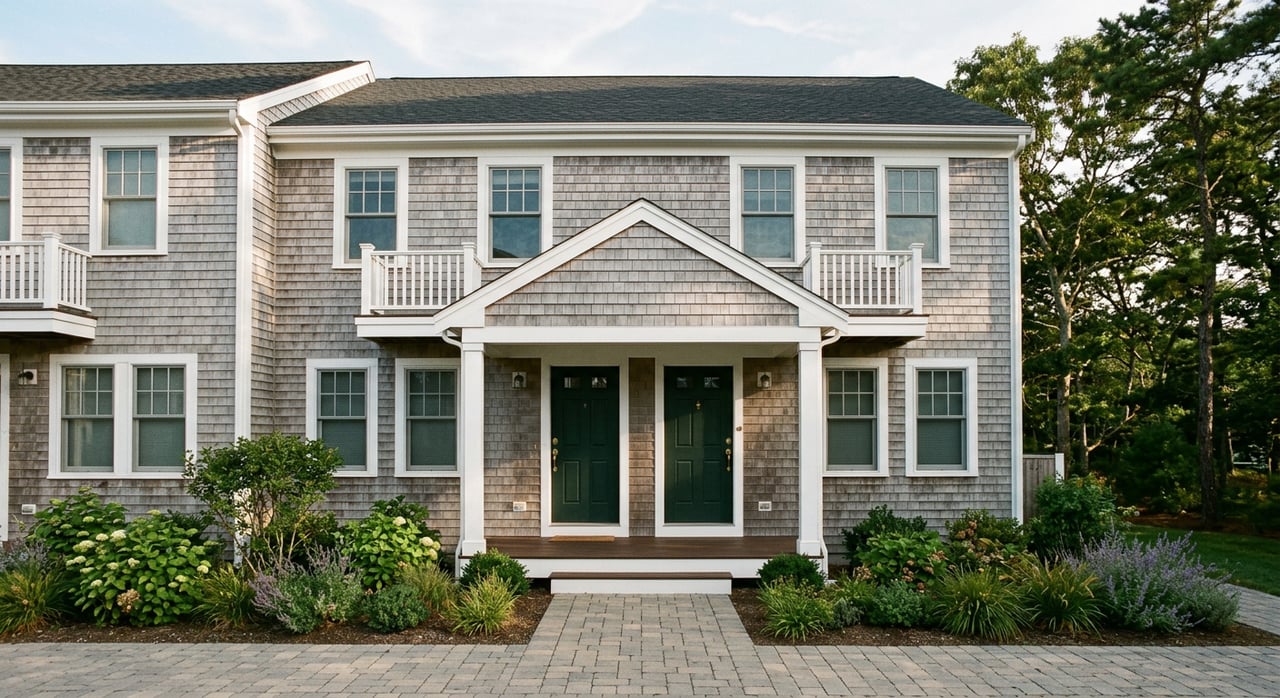
Are you picturing a breezy condo near the Sandwich Boardwalk or a classic Cape with a hydrangea-lined yard? Choosing between a condo and a single-family home in Sandwich comes down to lifestyle and total cost. You want clear, local facts to guide a smart choice. In this guide, you’ll see how prices, taxes, HOA fees, insurance, and rental rules compare in Sandwich so you can move forward with confidence. Let’s dive in.
Market snapshot in Sandwich
As of January 2026, the median listing price in Sandwich was about $748,500. That figure is a median list price snapshot, not a closed-sale number. Different publishers report different medians since they use different data windows and methods, and Sandwich’s small inventory can swing numbers. For a specific property decision, lean on current MLS data and recent comparable sales.
What Sandwich condos offer
You’ll find most condos clustered near Sandwich Village, the canal and boardwalk area, and communities like Highview and Southpoint. Many advertise amenities such as a pool or clubhouse, plus proximity to cafes, the library, and village shops. If you like an easy stroll to the Boardwalk or Cape Cod Canal Bikeway, condo living can put you close to the action. The town’s beaches and boardwalk are a quick reference point for walkability and coastal access, and you can explore options on the town’s page for Sandwich beaches and the Boardwalk.
Common HOA inclusions in Sandwich condos: exterior building and roof maintenance, landscaping, snow removal, trash, and a master insurance policy for common areas and building exteriors. Some associations include a portion of utilities like water or heat. Monthly HOA fees vary by community and amenities. A realistic local band for many resale condos is about $300 to $500 per month.
Cost comparison: price, taxes, HOA, maintenance
Purchase price is often lower for condos and higher for detached homes in Sandwich, though limited inventory can affect the gap. Your ongoing costs will hinge on taxes, HOA dues, insurance, and maintenance.
Property taxes: use the town’s math
The Town of Sandwich assessing update lists an average single-family assessed value of $667,300 and an average condo value of $389,700, with a tax rate of $10.80 per $1,000. That implies an annual tax around $7,207 for a typical single-family and $4,206 for a typical condo. The math is assessed value × tax rate ÷ 1,000. You can review the town’s figures in the Assessing Department update and then apply the exact assessed value for the property you choose.
HOA vs homeowner maintenance
- Condos: the HOA fee replaces many exterior upkeep costs, which smooths your budget. Local listings often show dues in the $300 to $500 range, with amenity-heavy or waterfront units sometimes higher. Always confirm what the fee covers and ask for the master insurance certificate.
- Single-family homes: you pay for all exterior upkeep directly. A common planning rule of thumb is to budget roughly 1% of the home’s value per year for routine maintenance and smaller replacements. Older or more exposed coastal homes can require more. You can read more on the 1% guideline from this practical overview of home maintenance budgeting.
Insurance and coastal risk
Condo owners typically carry an HO-6 policy for the unit’s interiors and personal property, plus any loss assessment coverage. The HOA holds a master policy for the building and common areas, so you will want to confirm deductibles and coverage scope. For properties near the coast or in FEMA flood zones, lenders may require flood insurance, and it is often a smart addition even when not required. For context on coastal risk planning on Cape Cod, see the state’s overview of sea level rise and coastal flooding.
Example numbers to illustrate
These are illustrative only. Always verify current listing data, HOA budgets, and insurance quotes.
Example: Southpoint condo
- Approximate list price: $456,000
- HOA dues: about $465 per month
- Annual property tax shown on listing: about $3,397
That means HOA plus property tax alone is roughly $748 per month before mortgage and insurance. The condo’s master insurance reduces your individual coverage needs, but you will still carry an HO-6 policy. Confirm any flood insurance requirements with a local insurer.
Example: Single-family baseline
- Many single-family listings in Sandwich trade in the mid $600,000s to $900,000s depending on location and water access.
- Using the town’s average single-family tax figure of about $7,207 per year, taxes are roughly $601 per month.
- Applying the 1% maintenance guideline to a $700,000 home suggests about $7,000 per year in routine upkeep, or $583 per month.
These figures do not include homeowners insurance or flood insurance if required. A coastal setting can increase those premiums, so build that into your planning.
Lifestyle and location tradeoffs
Privacy and control
A single-family home gives you a yard, more storage, and control over exterior choices like gardening or sheds. You set your own maintenance schedule and design preferences. If you value space between you and your neighbors, a home often delivers more privacy than a condo.
Convenience and walkability
Condos often trade some privacy for low maintenance and convenience. Many Sandwich condos sit close to Sandwich Village amenities, the canal paths, and the boardwalk, which can be appealing if you prefer a lock-and-leave setup. The town’s beaches and boardwalk and village anchors like the Heritage Museums & Gardens give you easy ways to enjoy the area with minimal upkeep.
Neighborhood patterns to consider
- Sandwich Village and Town Neck have smaller lots, some condo conversions, and close-in access to shops and dining.
- East Sandwich and Forestdale often feature larger detached lots and more space around homes.
- The Sagamore and Scusset areas provide quick canal and highway access, which can help weekenders.
Match the setting to how you plan to use the property year round or seasonally.
Rentals, financing, and rules that matter
Short-term rentals in Sandwich
If you plan to rent a home or condo for short stays, the town requires registration and inspections. Sandwich implemented a short-term rental program that includes registration, a first inspection, display of the certificate, and enforcement provisions. Get the details on Sandwich’s Short Term Rental registration and review the town’s registration instructions. If you are considering a condo, confirm the association’s rental policy since some HOAs restrict or prohibit short-term rentals.
Condo financing and warrantability
Condo projects that meet conventional lending standards are considered “warrantable,” which generally makes financing easier. If a community has high investor ownership, ongoing litigation, or certain budget issues, it may be labeled “non-warrantable,” which can limit loan options or require larger down payments. Ask your lender early whether a target condo is warrantable, and review this plain-English guide to warrantable vs non-warrantable condos.
Buyer checklist for Sandwich
Use this short list to compare any condo or single-family property:
- Verify the current price and recent comparable sales with live MLS data from your agent.
- For condos, request the full HOA packet: CC&Rs, bylaws, current budget, reserve study, master insurance certificate, last 12 months of meeting minutes, owner-occupancy and delinquency rates, and the rental policy. Your lender may also require a condo questionnaire.
- Confirm the exact HOA fee and what it includes. Ask about any planned special assessments.
- Pull the property’s assessed value and compute your tax estimate using the town rate via the Assessing Department update.
- Check flood zone status and insurance requirements using state and federal resources. The state’s overview of coastal flooding and sea level rise is a good starting point. Ask an insurer for a flood quote before you go under contract.
- If you intend to rent seasonally, confirm both the town’s STR registration rules and the HOA’s rental policy.
- For single-family homes, budget for ongoing upkeep. The 1% planning guideline is a helpful starting point, summarized here in a simple home maintenance budgeting guide.
Which is right for you
Choose a Sandwich condo if you value low exterior maintenance, village walkability, and easy access to the canal and beaches. Your monthly HOA will cover many line items, and a lock-and-leave setup can be ideal for a second home. Confirm rental rules and insurance details upfront.
Choose a single-family home if you want privacy, a yard, and full control over your property. Your taxes and maintenance will be higher in dollar terms, and insurance may be higher near the coast, but you gain flexibility and space. Match the neighborhood to your goals for year-round living or seasonal use.
If you are weighing both paths, we are happy to help you compare real properties, line by line, using current MLS, HOA budgets, and insurance estimates. Talk with a Local Cape Expert at Ermine Lovell Real Estate to map your next step.
FAQs
Which is cheaper to buy and keep in Sandwich?
- Condos often have lower entry prices, but HOA dues and master insurance add ongoing costs. Single-family homes usually have higher taxes and maintenance in dollar terms. Use the town’s assessing update to estimate taxes, and apply the 1% maintenance guideline for houses.
Is a condo better for a low-maintenance second home in Sandwich?
- Often yes. Many buyers choose condos for lower exterior upkeep and walkability to village amenities and beaches. Always confirm the HOA’s seasonal use policies and any rental restrictions.
Can I use a Sandwich property for short-term rentals?
- The town requires registration and inspections for short-term rentals. Review the STR registration page and your HOA’s rules, since some associations limit or prohibit short stays.
Do coastal Sandwich condos face higher insurance costs?
- Coastal location and FEMA flood zones can trigger flood insurance requirements in addition to your condo HO-6 and the HOA’s master policy. Discuss coverage and costs with an insurer after checking coastal risk context through the state’s coastal flooding overview.
What makes a condo warrantable for financing?
- Projects that meet conventional standards for owner-occupancy, budget health, and litigation status are generally warrantable, which expands loan options. See this summary of warrantable vs non-warrantable condos, and ask your lender to review the specific community early in the process.