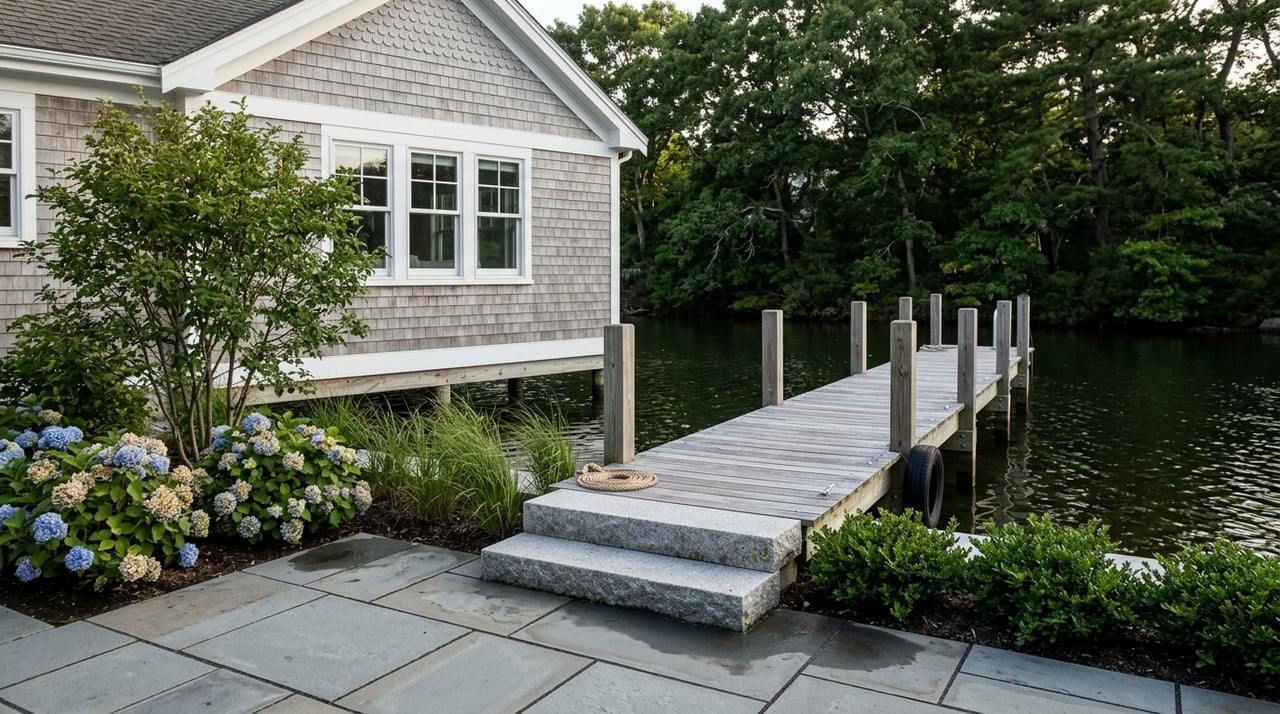
Wondering whether an East Falmouth “waterfront” home really gives you the water access you want? That is one of the biggest questions buyers face here, because a pond view, a boat-friendly shoreline, and a deep-water setup can mean very different things from one property to the next. If you are comparing homes in East Falmouth, this guide will help you understand the local water types, access issues, permitting realities, and due diligence points that matter most. Let’s dive in.
East Falmouth waterfront is not one thing
In East Falmouth, waterfront and pondfront homes sit across several very different coastal and inland water settings. The town separates this area into the Little and Great Ponds shoreline, the Green Pond coastal area, the Bournes Pond coastal area, and the eastern Eel Pond and Waquoit Bay corridor.
That matters because each setting offers a different mix of boating, shoreline conditions, environmental sensitivity, and access. Two homes may both be marketed as waterfront, yet deliver very different day-to-day use depending on where they sit.
Great Pond, Green Pond, and Bournes Pond
Great Pond is described by the town as Falmouth’s largest inland pond and a recreational boating area. That can make it especially appealing if your goal is time on the water, not just a view from the deck.
Green Pond has a different profile. It is shallow enough that larger vessels are limited, which can affect what kind of boating use is practical for a given property.
Bournes Pond also supports small-boat use and sits behind Menauhant Beach. For many buyers, that location creates a different lifestyle feel than an inland pond or a more protected estuary setting.
Eel Pond and Waquoit Bay
The eastern corridor includes Eel Pond, Waquoit Bay, the Childs River, and the Moonakis River. This part of East Falmouth is especially important to understand because it is not just scenic. It is also environmentally sensitive.
Waquoit Bay is identified by the state as an Area of Critical Environmental Concern and is part of the Waquoit Bay National Estuarine Research Reserve. If you are considering property here, shoreline protection and habitat rules are a bigger part of the ownership picture.
Pondfront does not always mean strong access
One of the most useful things to know as a buyer is that pondfront value is highly site-specific. A home on the water may offer beautiful views, but the practical use of that water can vary a lot.
The town notes that Little Pond has no real public access and serves mostly adjacent homeowners. Great Pond is different, with its passageway maintained by the Waterways Committee.
That is why it helps to look beyond the listing headline. If two properties are both called pondfront, you still need to ask how you can actually use the water and whether access is direct, limited, shared, or mostly visual.
What types of homes you will usually see
East Falmouth waterfront and pondfront inventory is usually made up of detached houses rather than dense multifamily buildings. Town housing data estimate that about 86% of Falmouth homes are detached single-family units, with a townwide median year built of 1974 for that housing type.
That broad housing pattern shows up along the water too. Buyers often see stand-alone homes in a mix of styles rather than one signature waterfront look.
Common style mix in East Falmouth
Recent East Falmouth examples point to a varied housing mix that can include:
- Cape-style homes
- Ranch-style homes
- Contemporary Cape designs
- Properties with private docks
- Properties with association dock access
For buyers, that means your search can be shaped as much by access, lot position, and condition as by architectural style. In East Falmouth, the same price range may include very different tradeoffs.
Water access rights can matter more than the view
A beautiful shoreline is important, but legal access rights often carry just as much weight. In many East Falmouth transactions, the key question is not only whether a home touches the water, but what rights actually transfer with the property.
That includes deeded access, float eligibility, mooring rules, and whether any current setup is properly permitted. These details should be verified early, because assumptions can lead to disappointment later.
Moorings do not automatically transfer
According to the Falmouth Harbormaster, moorings are waitlisted, cannot be sold, do not convey with a property, and may not be rented. The wait-list window runs from January 1 through March 15 each year.
This is a major point for buyers comparing East Falmouth waterfront homes. If a listing suggests boating convenience, you should confirm whether that convenience comes from a private dock arrangement, a nearby landing, or a mooring status that will not transfer after closing.
Floating docks and floats need approval
Floating docks and similar structures are also regulated separately. The town states that most floating docks require Conservation Commission and DEP approval, are available only to direct waterfront owners, and must be removed seasonally.
In practical terms, that means future dock or float plans should never be assumed. If your purchase depends on adding or continuing a water-access feature, that needs verification before you commit.
Public launches and beach access in East Falmouth
Not every buyer needs a private dock. For some households, nearby public launch points and beach access can provide the right balance of lifestyle and budget.
East Falmouth has several practical access points noted by the town. These include Green Pond Landing, White’s Landing on Child’s River, and Waquoit Bay Landing.
Menauhant Beach is the key public beach access point for East Falmouth and sits at the mouth of Bournes Pond. The town also notes that public landings and parking can be crowded on summer weekends, especially around Great Pond and Green Pond-related access points.
Why nearby access still matters
If you are choosing between direct waterfront and nearby water access, local launch points can be a meaningful part of the decision. A non-waterfront home with convenient launch access may fit your boating or beach goals better than a waterfront home with tighter use restrictions.
This is where local, property-level comparison becomes especially important. In East Falmouth, lifestyle value is often tied to how you plan to use the water, not just how close you are to it.
Pricing is sensitive to features
East Falmouth remains a high-priced market, especially when water features enter the picture. Recent market snapshots reported a March 2026 median sale price of $1.31 million in East Falmouth.
Current waterfront and pond-focused listing snapshots also showed median list prices around $1.28 million. These are not direct comparable sales, but they do reinforce an important point: pricing is sensitive to frontage, access rights, condition, and infrastructure, not just the word waterfront.
Why one waterfront home can price differently
Two homes with similar square footage can vary sharply in value if one has stronger boating utility, better shoreline access, or fewer future limitations. A pondfront home with mostly visual appeal may compete differently than a property with direct, usable water access.
That is why buyers benefit from comparing the full package. In East Falmouth, the details behind the view often shape long-term value.
Water quality and sewer planning affect ownership
In East Falmouth, water quality is part of the ownership story. The town’s Comprehensive Wastewater Management Plan is aimed at reducing nitrogen pollution in coastal ponds and estuaries, and its initial focus includes Little Pond, Green Pond, Great Pond, Bournes Pond, Eel Pond, and Waquoit Bay.
For buyers, this is not just a policy issue. It can influence future infrastructure, neighborhood planning, and how certain waterfront areas are viewed over time.
Great Pond sewer project timeline
The town reports that the Great Pond Phase 1 sewer project was approved in 2025, with sewer connections expected at the end of 2027. If you are buying near Great Pond, that is the kind of local infrastructure detail worth factoring into your review.
It is a reminder that waterfront value is tied to more than scenery. Current and future utility planning can affect ownership costs, project timing, and long-term property expectations.
Flood and permit review should be property-specific
Flood exposure in East Falmouth is not uniform. The town maintains separate flood map areas for Upper Bournes and Eel Pond, Waquoit Bay, and Little Pond with lower Great and Green Pond, which shows how localized conditions can be.
That is why broad assumptions do not work well here. A home near one shoreline may present a very different risk and review profile than another home only a short distance away.
A smart East Falmouth comparison checklist
If you are comparing waterfront or pondfront homes in East Falmouth, it helps to review:
- The specific water type
- Whether access is deeded, direct, shared, or simply nearby
- Whether any dock, float, or mooring rights are documented
- Whether the shoreline sits in a flood-prone area
- Whether future work may require local permit or environmental review
- Whether sewer planning or related infrastructure could affect the property
These are the details that can clarify whether a home supports your goals now and in the future.
Why local guidance matters in East Falmouth
East Falmouth waterfront real estate is nuanced. Bay, river, estuary, and pond settings each come with their own use patterns, access rules, and conservation considerations.
If you are buying here, the most helpful approach is to look at each property on its own terms. A careful review of access rights, permitting limits, flood mapping, and infrastructure plans can help you match the right home to the way you actually want to live.
Whether you are searching for a seasonal retreat, a year-round waterfront home, or a pondfront property with long-term potential, working with a brokerage that knows Falmouth at the village level can make the process much clearer. If you are ready to explore East Falmouth waterfront or pondfront homes, connect with Ermine Lovell Real Estate for thoughtful, local guidance.
FAQs
What does waterfront mean for homes in East Falmouth?
- In East Falmouth, waterfront can refer to homes on ponds, bays, rivers, or estuarine areas, and each setting can offer very different access, boating utility, and environmental considerations.
Are all East Falmouth pondfront homes good for boating?
- No. Some pondfront homes have stronger recreational access than others, and factors like water depth, passageway maintenance, and local rules can affect how usable the water really is.
Do moorings transfer with East Falmouth waterfront homes?
- No. The Falmouth Harbormaster states that moorings do not convey with a property, cannot be sold, may not be rented, and are subject to a waitlist process.
Can you add a floating dock to an East Falmouth waterfront property?
- Possibly, but most floating docks require Conservation Commission and DEP approval, are generally limited to direct waterfront owners, and must be removed seasonally.
Which public water access points serve East Falmouth homes?
- Town-listed access points include Green Pond Landing, White’s Landing on Child’s River, Waquoit Bay Landing, and Menauhant Beach for public beach access.
Why is due diligence important for East Falmouth waterfront and pondfront homes?
- Due diligence helps you verify access rights, flood-zone conditions, permit constraints, water-use options, and infrastructure factors like sewer planning before you buy.